Zakat in the Digital Age: How Technology is Changing Islamic Giving
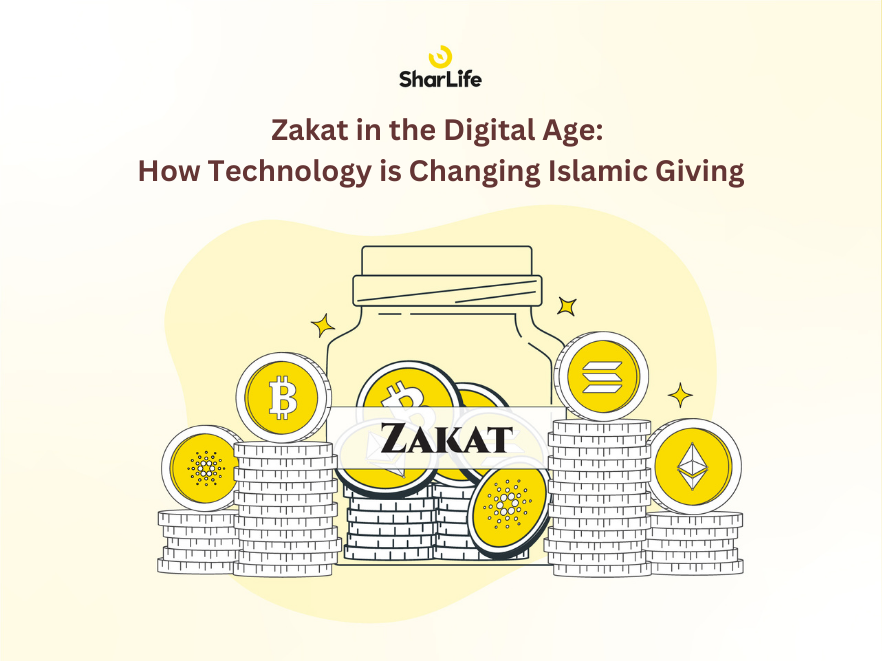
Zakat, one of the five pillars of Islam, has always been a crucial mechanism for wealth redistribution and social welfare. Traditionally, Zakat was given on physical assets such as gold, silver, livestock, and agricultural produce. However, as financial systems evolve, so too does the application of Zakat. Today, with the emergence of stocks, cryptocurrencies, and digital assets, Zakat has expanded beyond traditional forms, requiring new rulings and innovative solutions to ensure compliance with Shariah principles.
Wealth in Islamic Law
In Islam, the concept of wealth (māl) refers to anything that has value, can be owned, and can be utilized. It is not limited to physical forms but also includes intangible ownership rights such as intellectual property and digital assets. The expansion of financial markets and digital economies necessitates a deeper understanding of how modern assets fit within Islamic economic principles, especially regarding Zakat.
Zakat on Stocks
Stocks are an asset that Muslim investors must consider when fulfilling their Zakat obligations. While there are no explicit nas specifically mandating Zakat on stocks, the obligation can be derived from rulings on Zakat for business assets. Since stocks are classified as business assets, they fall under the same Zakat requirements.
Allah commands believers to give from their lawful and pure earnings in Surah Al-Baqarah (2:267):
يَـٰٓأَيُّهَا ٱلَّذِينَ ءَامَنُوٓا۟ أَنفِقُوا۟ مِن طَيِّبَـٰتِ مَا كَسَبْتُمْ وَمِمَّآ أَخْرَجْنَا لَكُم مِّنَ ٱلْأَرْضِ ۖ
Zakat Calculation for Stocks
Zakat is obligatory for individual shareholders and falls under Zakat on stocks. The Zakat rate is 2.5% of the current market value of the shares owned. For shares purchased for trading or short-term investment, zakat is calculated at 2.5% of the profit earned, which is derived from the selling price minus the purchase cost.
| Total stocks owned | 50,000 units |
| Purchase cost | RM1.50 |
| Selling price | RM1.70 |
Zakat amount = ([RM1.70 - RM1.50] x 50,000 unit) x 2.5%
= RM10,000 x 2.5%
= RM250
Meanwhile, for shares purchased for long-term holding to earn dividends, Zakat is calculated at a rate of 2.5% on the net value of the shares, after deducting any outstanding financing or loans taken for the purpose of purchasing the shares, if applicable.
Zakat on Digital Assets
Digital assets include digital currencies and digital tokens as defined by the Securities Commission of Malaysia. According to Islamic law, for something to be considered as wealth (māl), it must:
- Must have attached value
- Must be beneficial with regard to custom
- Can be utilized and stored with clear ownership
- No clear prohibition
Since digital assets fulfill these criteria, they are recognized as wealth (māl) in Islamic law, and the general obligation of paying Zakat on wealth applies to them as well.
Zakat Calculation for Digital Assets
(Digital Asset Units × Current Price of Digital Asset) - Related Costs] × 2.5%.
For example, if a Muslim investor holds 0.2 BTC, and the current price is $90,000 per BTC, the Zakat calculation would be:
| Unit Asset Digital | 0.2 BTC |
| BTC Current price | 90,000 |
| Related cost (RM) | 50.00 |
| Zakat rate | 2.5% |
| Total Zakat | 448.75 |
Conclusion
As financial markets continue to innovate, Muslim investors must stay informed about how modern assets fit within the framework of Zakat. Whether it is stocks, cryptocurrencies, or other digital assets, ensuring proper Zakat compliance is essential to maintaining financial purity and fulfilling Islamic obligations.
At Sharlife, we offer Zakat on Digital Asset, where you can pay Zakat on your cryptocurrency holding. Fulfilling your Zakat obligations has never been easier. Use Sharlife's Zakat on Digital Asset service to calculate and pay your Zakat efficiently. Start today and ensure your investments remain aligned with Islamic principles.
